the formulation note · vol. 01
estrogen drops. skin holds less water. none of this is a personal failing.
The formulation note is the long version of what fits on a bottle. Four ingredients, calibrated for body skin in transition. Plain English for everything else, because there is no clinical-claim shortcut to actually understanding what a formula does.
the thesis
the body in transition is a different formula brief.
The body of a woman at thirty-five and the body of a woman at fifty-two are not the same formulation brief. They share the same skeleton, the same ingredient categories, the same shelf at the pharmacy — and almost nothing else. From the late thirties onward, estrogen begins a slow, uneven decline, and with it the systems estrogen quietly underwrote: the lipid layer that holds water at the surface, the ceramide synthesis that keeps the barrier coherent, the structural collagen that gives body skin its bounce. None of this is a problem to be cured. It is the body, working.
The lotion that worked at thirty-five is not failing you at forty-eight. It was simply not designed for the skin you are in now.
Body skin in transition holds less water at the surface, repairs more slowly, and shows time first in the places where the dermis is thinnest — the neck, the back of the hand, the décolleté. The fatty-acid profile of the sebum shifts, which is why the wash you used at thirty-five may feel drying now without the formula having changed at all. The cream you used at thirty-five may feel like it sits on top, because the lipid scaffolding underneath it is different. Knowing this changes the brief.
Tideline is calibrated to that brief. Niacinamide for barrier turnover. Squalane for the lipid the body now makes less of. Palmitoyl tripeptide-1 for the structural matrix in the thinnest body skin. Sage olive extract for tone, on the slowest possible terms. The pH targets are matched to skin’s 5.5; the textures are designed to be layered in sequence; the surfactant load is calibrated to clean without stripping the lipids the body now spares less of. We do not treat, cure, or regrow. We supply the body with what it now needs, and we say so in plain English.
the four ingredients
small list. long shadow.
ingredient 01
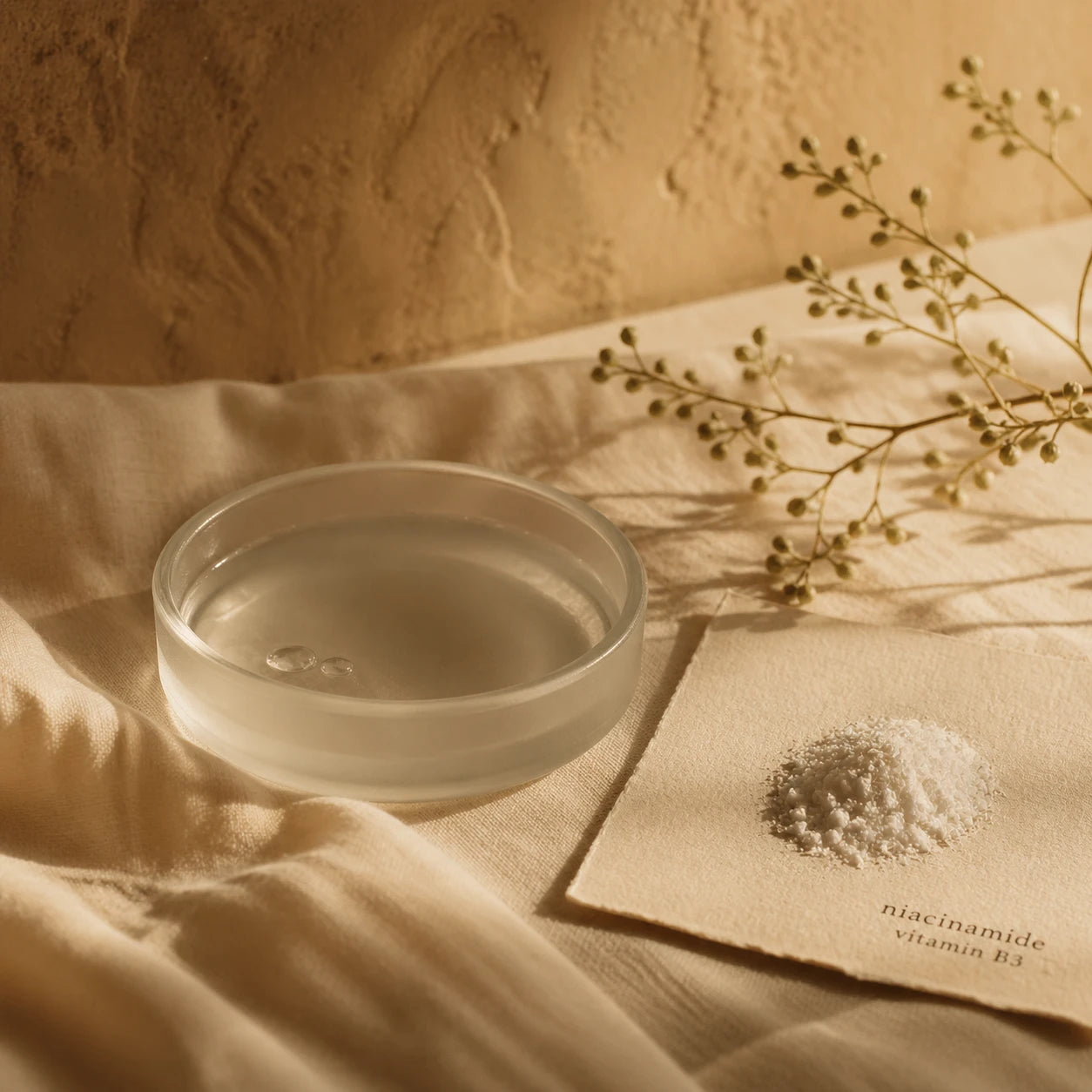
niacinamide
role · for the barrier that thins
Niacinamide is vitamin B3 in its cosmetic form. In the body skin of a woman in transition, the barrier — the lipid mortar that holds the outer layer in place — turns over more slowly and holds less water. Niacinamide is one of the few small-molecule actives that has decades of cosmetic literature behind its ability to support that turnover and to even tone over weeks of use. We use it at 3-4% across the line, which is the upper end of what feels good on intact skin without tipping into irritation.
used in · daily wash · daily butter · daily cream
ingredient 02
squalane
role · for the lipid the body now makes less of
Squalane is the saturated, plant-derived sibling of squalene — the lipid the body produces in the sebum and gradually makes less of from the late thirties onward. The cosmetic version sourced from sugarcane fermentation is identical at the molecular level. It is the closest thing we have to giving body skin its own oil back, and it does the work without the silicone slip or the mineral-oil film. Daily Butter is built around it.
used in · daily butter · daily cream
ingredient 03
palmitoyl tripeptide-1
role · for the body skin that shows time first
Peptides have been the workhorse of premium face skincare for fifteen years. They have not been on body care, mostly because the price math did not work in mass-market lotions. Palmitoyl tripeptide-1 signals the dermis to maintain its structural matrix — the cosmetic-only way of saying it supports the body skin that thins fastest in transition: the neck, the décolleté, the V where a robe falls open. We use it in Daily Cream at the same parts-per-million the face industry has used for a decade.
used in · daily cream

ingredient 04
sage olive extract
role · for tone, on the slowest possible terms
Olea europaea leaf extract — the Mediterranean olive leaf — supplies a small constellation of polyphenols (oleuropein chief among them) that the cosmetic literature attaches to even-tone support over time. We pair it with sage in the fragrance for a quiet herbaceous note. It is the slowest active in the line. It is doing the most work in places we will not see for months, which is exactly the right register for a body in transition.
used in · daily cream
what we refuse
four locks the formula does not unlock.
no retinol on body skin
Body skin in transition does not tolerate retinoids the way the face does. We refuse them across the line.
no essential oils as primary actives
Lavender does not replace a peptide. We use fragrance under 0.5% and never as the active.
no color additives
Our formulas are the color of their ingredients. No tint, no dye, no synthetic pigment.
no fragrance synthesizing endocrine concerns
Phthalate-free, parabens-free, with allergen disclosure. Editorial register, but with the receipts.
tested, calmly
what the formula was put through, in cohort.
- 5.5
pH
matched to the body's natural surface pH across all three SKUs.
- 8
weeks
cohort wear-test before any formula left the bench. Twice the typical small-batch window.
- 24
women, 41–63
the wear-test cohort. Real body skin in transition, not synthetic-skin in vitro.
shop the formulation
the four ingredients, in three bottles.
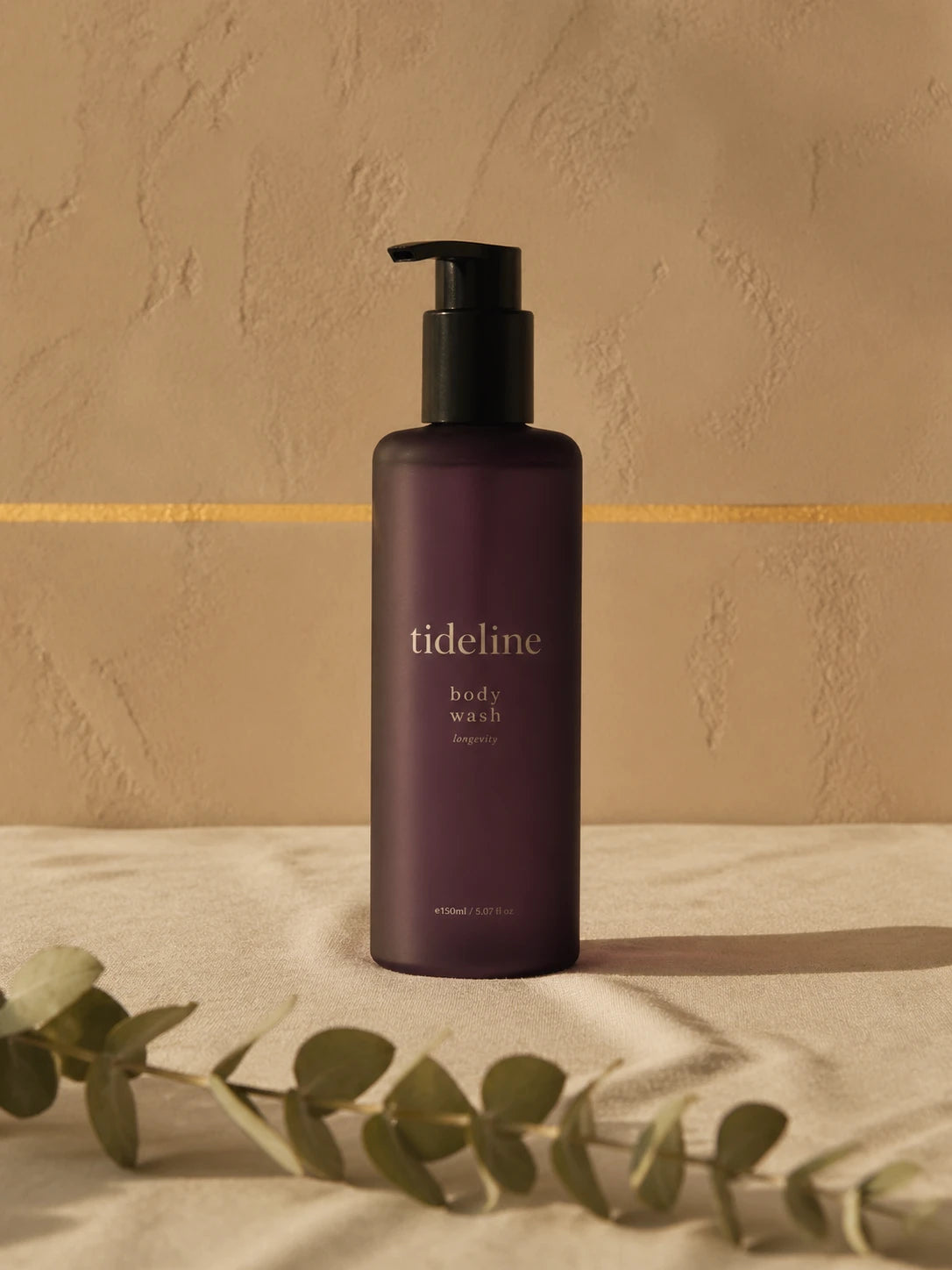
01morning + evening
daily wash
A nourishing all-in-one body cleanser. Low foam. No drying sulfates. Gentle on a barrier that asks for more these days.
shop daily wash · $42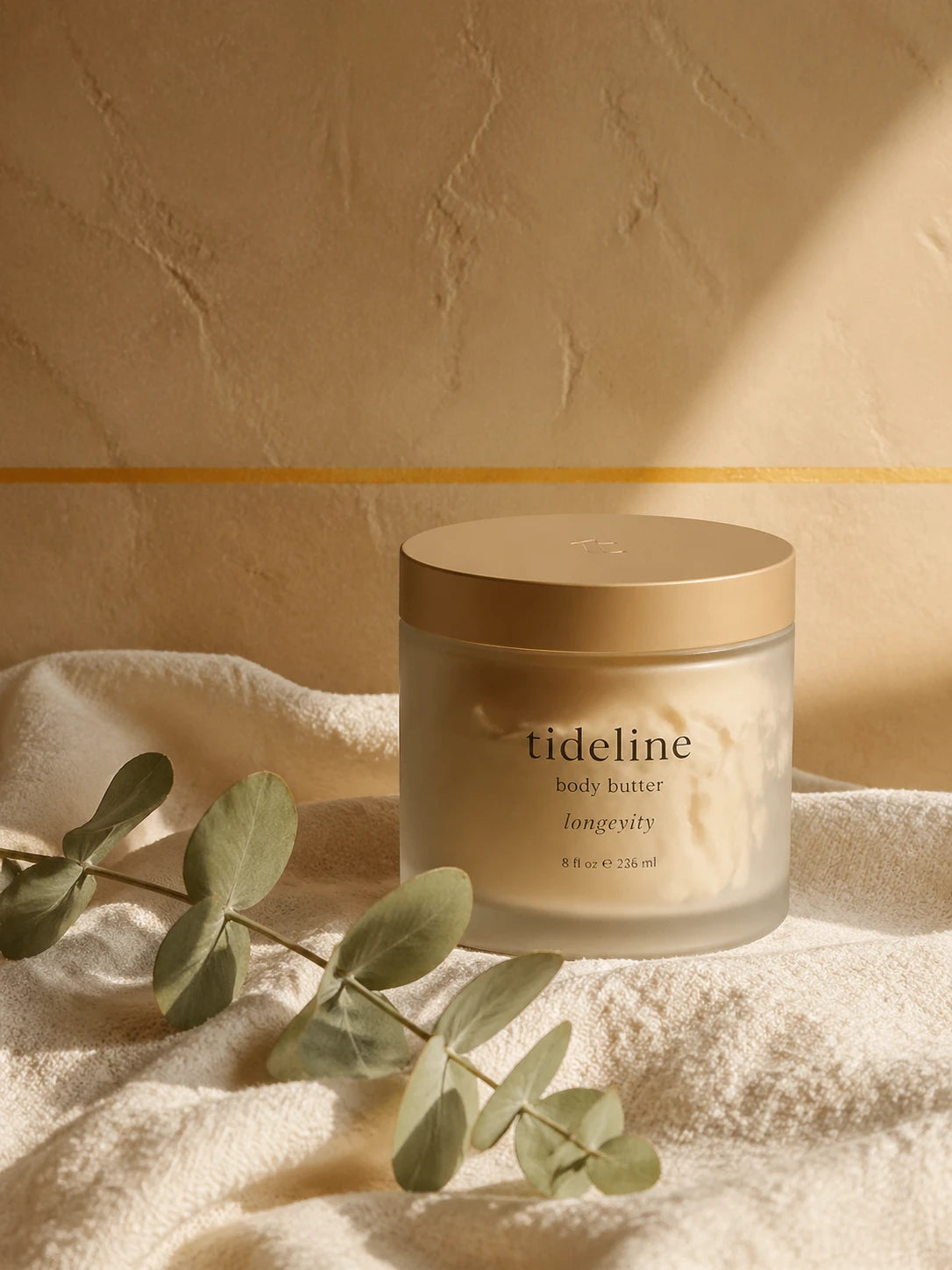
02after the shower
daily butter
Rich without heavy. A whipped shea body balm that absorbs in under a minute and stays on for a day.
shop daily butter · $38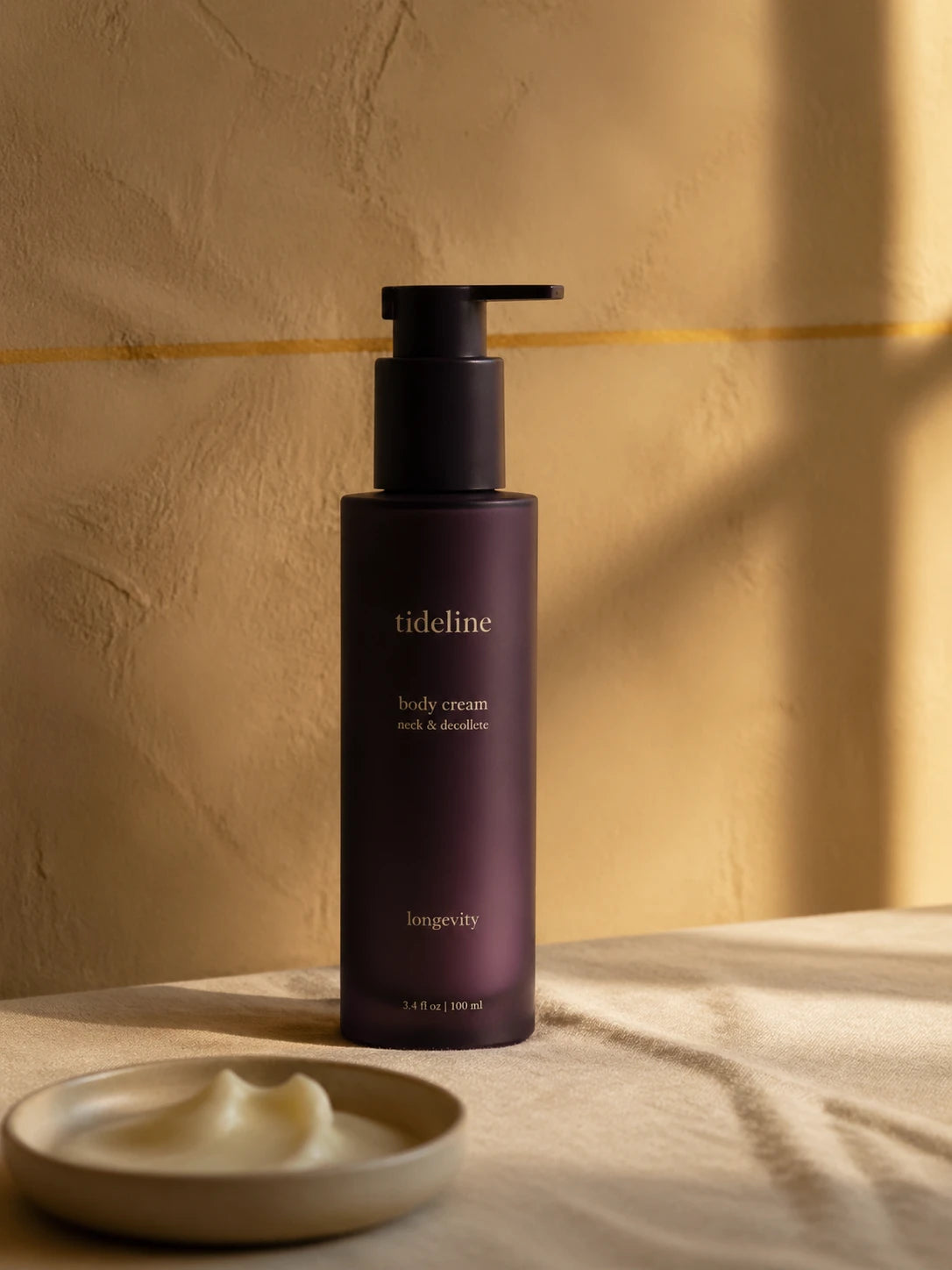
03neck + décolleté
daily cream
A peptide and collagen-supporting body moisturizer designed for the neck, jawline edge, and décolleté. Sit-up-straight skincare, finally for the body.
shop daily cream · $58